01
What Sync actually does
Sync automatically matches one track's tempo and beat alignment to another, doing instantly what beatmatching by ear does by hand. Press it and the deck adjusts its BPM to match the other deck and lines up the beats, so the two tracks play locked together with no manual nudging.
It works by reading the track's analysis — the BPM value and the 'beat-grid', a map of where every beat falls that your software (rekordbox, Serato, Engine) calculates when you import a track. Sync lines up these grids. That's the crucial detail: Sync is only as good as that analysis. If the software detected the BPM correctly and placed the grid accurately on the beats, Sync is flawless. If the analysis is wrong — and it sometimes is, especially on tracks with live drums, tempo changes, or unusual rhythms — Sync confidently locks two tracks together that are actually out of time.
So Sync isn't magic; it's automation of a mechanical task, dependent on data that's usually right but not always. Understanding that is the key to using it well: you trust it, but you stay ready to check it, which is what the rest of this guide covers.
02
The real benefits
Top professional DJs use Sync regularly, and not because they can't beatmatch — most learned by ear and choose Sync deliberately. The reason is that beatmatching is only one of many things a DJ does, and automating it frees attention for everything else. With the beats locked automatically, you can focus on selecting the perfect next track, working effects and filters, using hot cues and loops creatively, layering three or four decks at once, and — most importantly — reading and steering the crowd. The mental bandwidth that used to go into keeping two kicks aligned now goes into musicianship and performance.
Sync also enables things that are hard or impossible by hand. Four-deck mixing, where you're layering several tracks, is far more manageable when the gear holds them in time. Tight, creative routines with stems, loops and cues across multiple decks rely on rock-solid sync. And in a loud, chaotic booth, Sync removes one variable so your set stays clean under pressure.
Used this way, Sync isn't a crutch — it's a tool that raises the ceiling of what you can do. The skilled DJ uses it to do more, not to do less.
03
Where Sync fails
Sync's weakness is its dependence on track analysis, so it fails wherever that analysis struggles. Tracks with live or human-played drums often have slight timing variations that a rigid grid can't capture, so Sync drifts. Older tracks, or those with tempo changes, ramps or no steady beat, can have wrong or wandering grids. Some genres — disco, funk, classic hip-hop, anything recorded to a human drummer — are notorious for fooling automatic beat detection. And occasionally the software simply detects the BPM as half or double the real value, or places the grid a beat off.
When Sync locks onto a bad grid, it confidently plays two tracks out of time — and a DJ who blindly trusts it won't notice until the mix sounds wrong in front of everyone. That's the real risk: not that Sync is cheating, but that it can fail silently.
The fix is to stay engaged. Always listen to your mix rather than just watching the screen — your ears will catch drift that the lights won't. Check and fix beat-grids on your important tracks during prep, so Sync has good data to work with. And keep your hand near the jog: if a synced mix starts to slip, a quick manual nudge corrects it — which only works if you know how to beatmatch by hand. Which brings us to the last lesson.
04
Why learn to beatmatch anyway
Here's the honest bottom line: use Sync freely, but learn to beatmatch by ear anyway. The two aren't in conflict — the best DJs can do both and choose moment to moment.
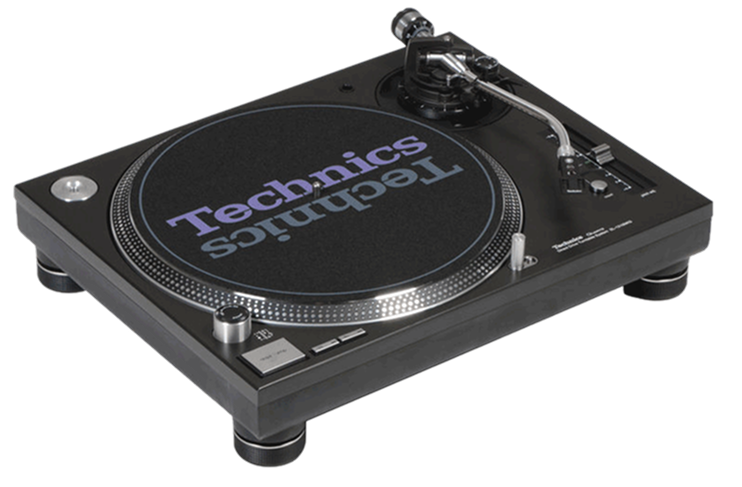
Why still learn the manual skill? First, control: when Sync fails on a bad grid (and it will), only a DJ who can beatmatch by hand can save the mix in real time. Second, gear: not everything has Sync — club turntables, some setups, and battle situations need manual skill, and you don't want to be helpless on unfamiliar equipment. Third, and most importantly, ears: the process of learning to beatmatch trains you to really listen — to hear tempo, phase, drift and groove — and that listening makes every other part of your mixing better, from EQ to phrasing to knowing when a blend is truly clean. DJs who only ever press Sync often never develop that ear, and it shows in subtler ways.
Think of it like driving a manual car before relying on automatic: you understand what's happening under the hood, so you're in command of the machine rather than the other way around. Learn to beatmatch until you can do it confidently, then use Sync whenever it serves the performance. That's not cheating — that's mastery. The button is a tool; the skill is yours.