01
The three types, explained
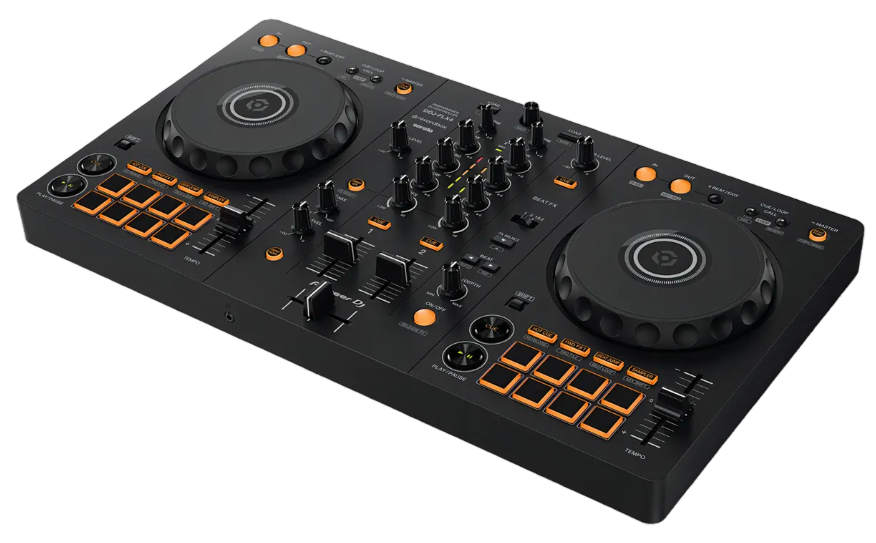
Three terms cause endless confusion, so let's define them simply. A controller is hardware with no brain of its own — it has jog wheels, faders and pads, but it must connect to a laptop running DJ software, which does the actual work. The controller is just the hands-on surface. They're affordable and beginner-friendly.
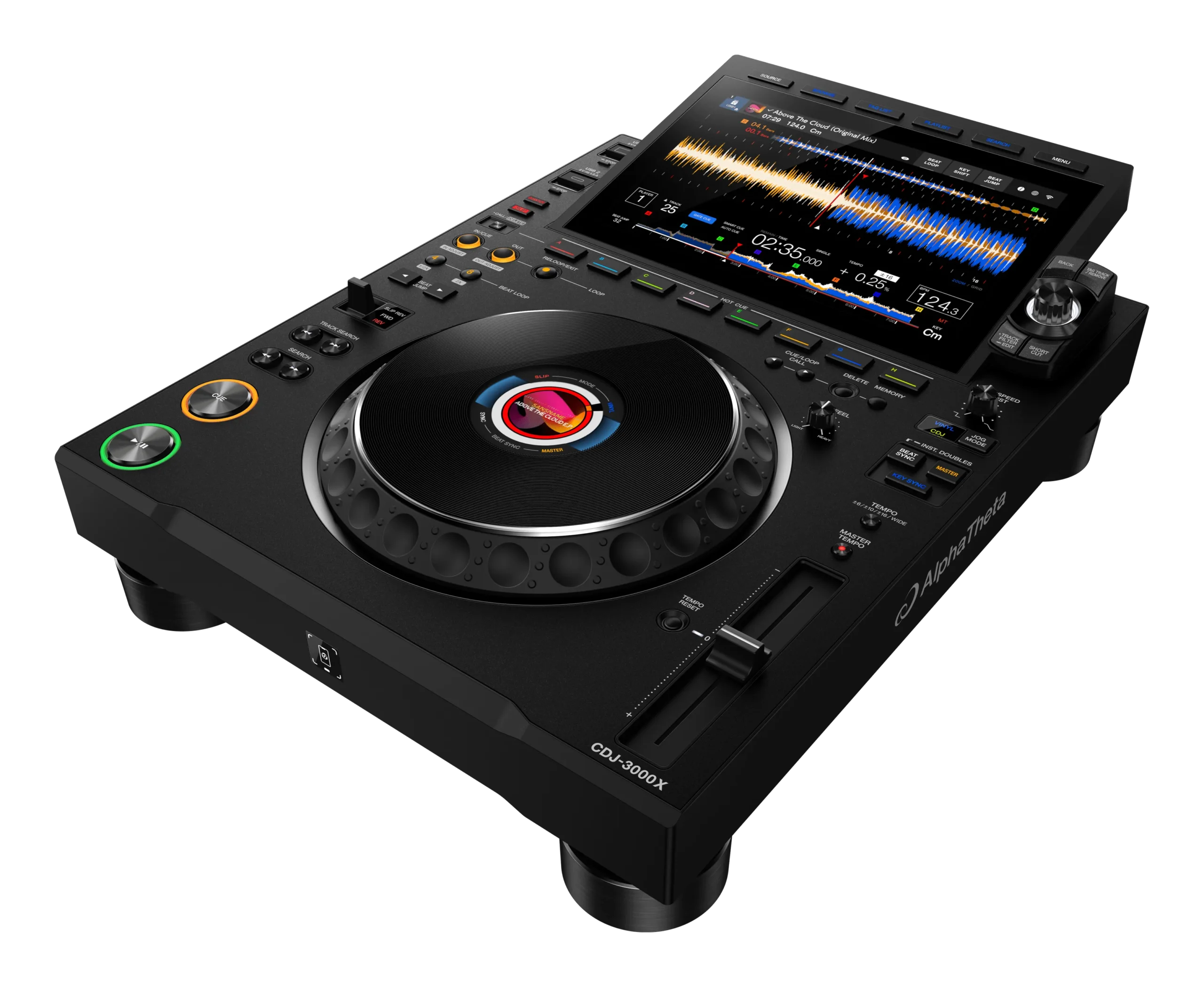
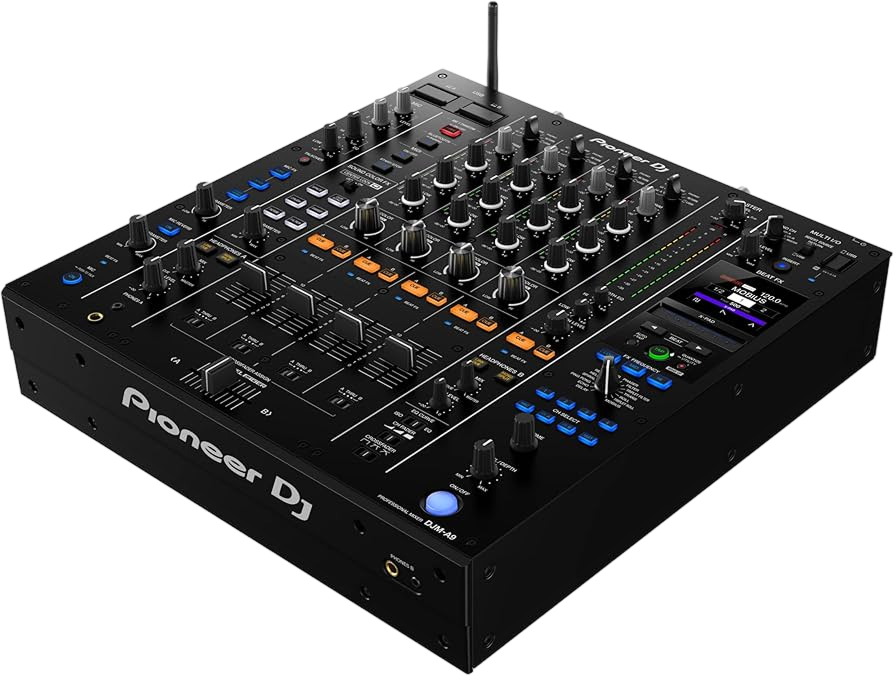
CDJs are professional 'multiplayers' — each is a single deck that plays one track, and you use two (or more) feeding a separate DJ mixer. CDJs have their own screen and brain; they play from a USB stick with no laptop. A pair of CDJs plus a mixer is the standard professional club setup, and it's expensive.
A standalone (or all-in-one) is the middle ground: like a controller in shape (two decks and a mixer in one unit), but with a screen and computer built in, so it plays from a USB stick with no laptop — combining the convenience of a controller with the laptop-free independence of CDJs.
So the quick version: controllers need a laptop and are cheap; CDJs are separate pro players plus a mixer, no laptop, expensive; standalones are an all-in-one with no laptop, in between. The next lessons weigh up each.
02
Controllers: pros & cons
Controllers are where the vast majority of DJs start, for good reasons. They're by far the cheapest way in — you get jogs, a mixer, pads and effects in one unit for a fraction of the cost of club gear. They're everything-in-one, so there's nothing else to buy beyond headphones and speakers. And good controllers are laid out like club CDJs and mixers, so the muscle memory you build transfers directly when you step up. You can learn every single fundamental of DJing on a controller.
The trade-offs: a controller needs a laptop, which means another device, cables, and the small risk of software crashing mid-set (rare with good gear, but real). Cheaper controllers have smaller, lighter jog wheels and fewer features than club gear, so the feel isn't identical (though units like the DDJ-1000, in our guides, get very close). And in a club, you'll usually play on the house CDJs, not your controller — so at some point you'll want to be comfortable on club gear too.
None of these are dealbreakers for learning. For nearly every beginner, a controller is the right first choice: cheap, capable, and a direct on-ramp to everything else.
03
CDJs & standalone: pros & cons
CDJs and standalones share a big advantage: no laptop. That means fewer things to crash, a cleaner setup, and independence from a computer. CDJs specifically are the club standard, so being fluent on them means you can walk into almost any professional booth and play — a genuine career advantage. They have premium, full-size jogs and a rock-solid feel.
The downsides of CDJs are cost and footprint: a pair of CDJs plus a mixer is expensive and takes up space — a big investment for a beginner, and overkill when an entry controller teaches the same skills. You're also buying three separate boxes.
Standalones (all-in-ones like the XDJ-RX3 or Prime 4, in our guides) are a smart compromise: laptop-free and self-contained like CDJs, but everything in one unit and cheaper than a full CDJ rig. They're closer to club gear than a basic controller and great for gigging without a laptop. The trade-off is they still cost considerably more than an entry controller, and a single unit isn't quite the same as the separate-players setup you'll find in clubs.
So: CDJs for ultimate club-readiness at a high price; standalones for laptop-free convenience in one box at a middle price.
04
Which should you learn on?
Here's the honest, clear answer: for almost everyone starting out, learn on a controller. It's the cheapest way to get mixing, it teaches every fundamental, and because good controllers mirror club layouts, the skills transfer straight to CDJs and standalones later. Spending big on CDJs as a first purchase is a classic beginner mistake — you'll learn no faster, and you'll have spent several times more.
The key insight that frees you from the debate: the skills are identical across all three types. Beatmatching, EQ mixing, phrasing, reading a crowd (all in our Techniques section) work the same on a controller, a standalone or CDJs — the gear is just the surface. So whatever you learn on, you can play anywhere; you simply adapt to the specific controls.
A sensible path for many DJs is: start on a controller, get genuinely good, then — if you want to play out in clubs — spend some time getting comfortable on CDJs (borrow, rent, or use a venue's gear) so the booth feels familiar. You don't have to own CDJs to learn them.
So don't let the gear debate stall you. Get an affordable controller, start mixing today, and let your equipment grow with your skills and your gigs.