01
Beats, bars & phrases
Almost all dance music is built on a tidy, repeating count, and once you can hear it, mixing gets dramatically easier. It works in layers. A beat is one pulse — the thing you nod your head to. Four beats make a bar (in the four-on-the-floor music most DJs play, you count '1, 2, 3, 4' and the kick lands on each number). Then bars group together: four bars make a phrase, which is sixteen beats, and phrases often group into bigger sections of eight bars (thirty-two beats).
Why does this matter? Because producers build tracks around these blocks — things change on phrase boundaries. A new element drops in, a breakdown begins, the drop hits — almost always at the start of a fresh phrase, on a '1'. The music has a natural grid of turning points.
Your job as a DJ is to line your mixes up with that grid. When you bring a new track in at the start of a phrase rather than randomly in the middle of one, the two tracks' structures click together and the transition sounds intentional. Learn to feel this count — 1-2-3-4, four bars to a phrase — and you've unlocked the timing sense behind every clean mix.
02
The anatomy of a track
Most DJ-friendly tracks follow a predictable shape, and knowing it tells you where to mix. The intro is usually stripped-back — often just drums and a few elements — and it's built deliberately long and simple so DJs have room to blend the track in. Then comes a build that adds energy and tension, leading to the drop or main section where the full track kicks in. Partway through there's usually a breakdown — the energy pulls back, drums may drop out, tension rebuilds — before another drop. Finally the outro strips back down again, mirroring the intro, giving you room to mix the next track in.
This shape is a gift to DJs. The intros and outros are the natural mixing zones: they're sparse, so when you overlap the outro of one track with the intro of the next, there aren't many elements competing — the blend stays clean. The drops and full sections are dense and energetic, so you generally don't want two of them fighting at once.
So the classic move is to start bringing a new track in during its intro while the current track plays its outro, swapping the bass over so the new track takes over as the old one ends. Learn to recognise these sections by ear and you'll always know where in a track a mix belongs.
03
Counting phrases & finding the '1'
To mix on the grid, you need to count it — and it's a skill you can drill until it's automatic. Put on a track and count the beats out loud in fours: '1, 2, 3, 4, 1, 2, 3, 4...'. Each time you reach a new '1', that's the start of a new bar. Now count the bars in fours too: '1-2-3-4, 2-2-3-4, 3-2-3-4, 4-2-3-4' — when you've counted four bars, you've completed a phrase, and the next '1' is the start of a fresh phrase. Big changes in the music almost always land on those phrase-starting '1's.
The most important beat to find is the '1' — the first beat of a phrase, where the music resets and a new section often begins. With practice you'll feel it coming: there's usually a cue, like a snare roll, a riser, or a cymbal crash right before it. Producers signal the '1' on purpose so it lands with impact.
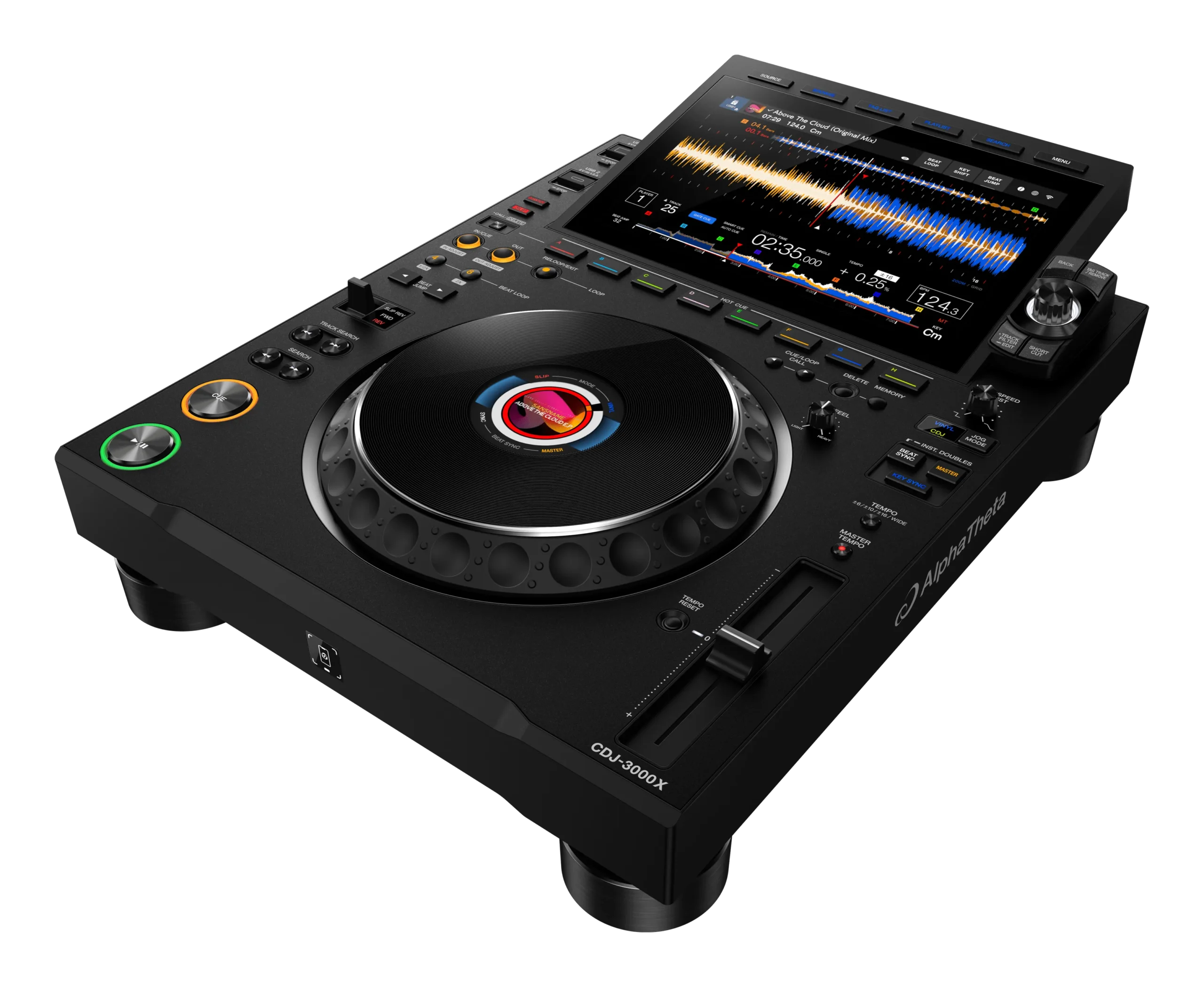
The waveform displays on your gear help while you learn — you can see the regular pattern of phrases and the bigger markers where drops hit. But train your ears too, by counting along to tracks you know. Once you can find the '1' instinctively, you can time everything — when to start a mix, when to drop an effect, when to hit a cue — to land exactly where the music turns.
04
Where to start and end a mix
Phrasing turns 'when do I mix?' from a guess into a plan. The principle is simple: start your transition at the beginning of a phrase, and end it at the beginning of a phrase. That way both tracks' structures stay aligned the whole way through.
In practice: as your current track approaches its outro, wait for the start of a fresh phrase — a clean '1' — and bring the new track in there, beatmatched and with its bass cut. Because you started on a phrase boundary, the two tracks' bars line up, so their snares, claps and changes happen together rather than smeared apart. Then let them ride for a phrase or two, and complete the swap (bass over, old track out) on another phrase boundary, ideally as the new track's main section is arriving so the energy lifts right as the old track leaves.
The length of a blend is up to the music and the moment: a long, hypnotic house blend might run many phrases, while a fast open-format set might cut on a single phrase. Either way, starting and ending on phrase boundaries is what makes a transition feel composed. Mix in the middle of a phrase and even a perfect beatmatch feels slightly 'off' — because the structures are misaligned. Respect the grid and your mixes lock in.
05
Practising phrasing
Phrasing is a listening skill, so you build it by listening actively. Here's a practice path. First, just count: play tracks you love and count beats in fours, then bars in fours, until you can feel each new phrase arrive without thinking. Clap or nod on every '1' to lock it in. Do this on the train, on a walk, anywhere — it doesn't need decks.
Next, predict: as you listen, try to call out what's coming — 'drop in two bars', 'breakdown next phrase' — and see if you're right. You'll quickly learn the little cues (risers, snare rolls, filter sweeps) producers use to signal a change. This trains you to anticipate the turning points instead of reacting late.
Then, on the decks, practise mixing only on phrase boundaries. Set cue points on the '1' at the start of a track's intro and on key phrase starts, so you can launch the next track exactly on the grid. Record your mixes and listen back specifically for alignment — you'll hear immediately when a blend was a beat or a bar off. Within a few weeks of focused counting, phrasing stops being something you think about and becomes a feel: you'll just know when a mix should happen, and your sets will flow like one continuous piece of music.