01
What MWM Phase is
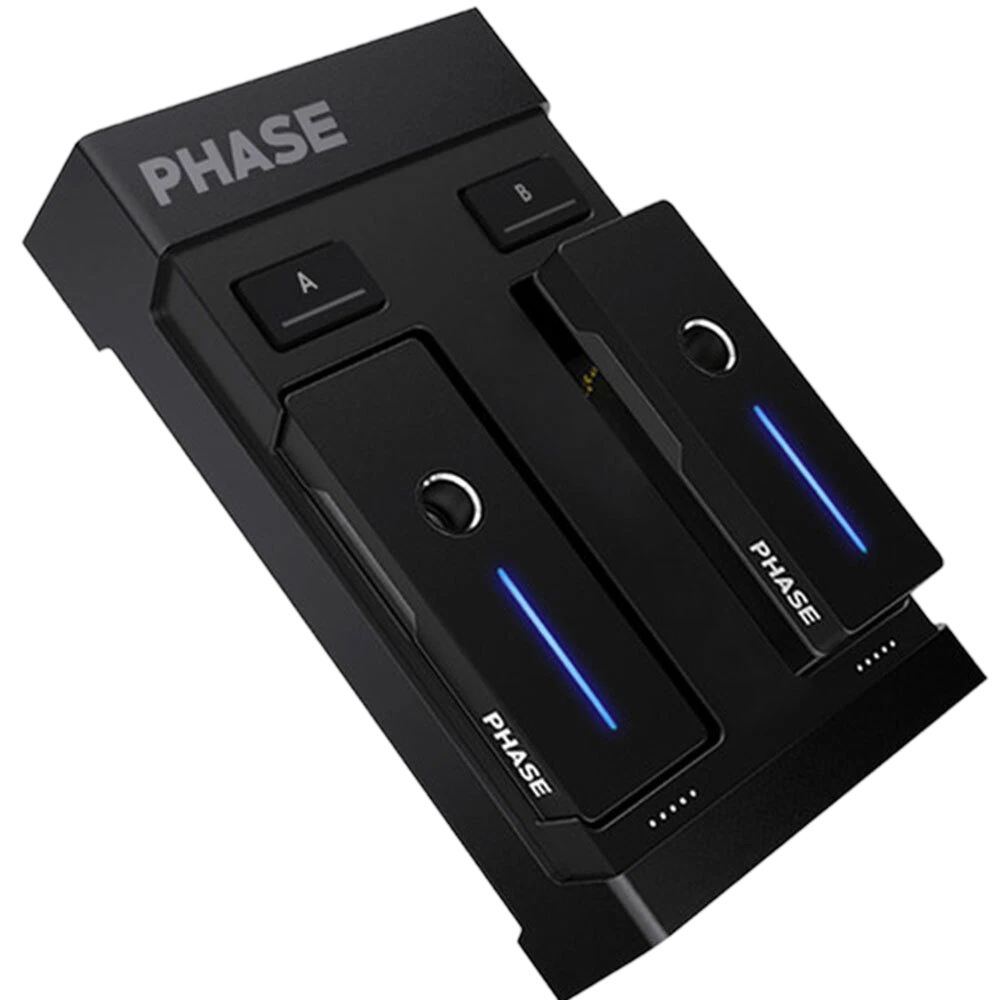
MWM Phase is a wireless DVS (Digital Vinyl System) — a way to control the digital tracks in your laptop using real turntables, but without the usual control record and needle. Traditional DVS plays a special timecode vinyl that a needle reads; Phase replaces all of that with two small remotes that clip onto your records and a receiver that plugs into your mixer. Move the record, and Phase tracks that movement wirelessly to drive your digital track in Serato or rekordbox.
Why does that matter? The biggest frustration of classic DVS is the needle skipping out of the groove when you scratch hard or when the floor shakes. Phase removes the needle entirely, so there's nothing to skip — and it removes the cables running to your turntables, cleaning up your setup. For scratch DJs and mobile/touring DJs who value reliability, that's a real advantage.
It keeps the feel of real turntables (you're still moving actual records by hand) while giving you a digital library and rock-solid tracking. This guide explains how it works, how to set it up, and how it compares to traditional DVS so you can decide if it's for you.
02
How the wireless tracking works
Phase has two parts: the remotes and the receiver. The two small remotes attach to the centre of each of your records (held by an adhesive spindle adapter), spinning with the record. The receiver is a small box that connects to your DJ mixer where your timecode signal would normally go, and it talks to the remotes wirelessly.
As a record spins and you move it, each remote senses its rotation and direction precisely and transmits that information to the receiver, which feeds it to your software as if it were a timecode signal. So your software always knows exactly how fast and which way each record is turning, and plays your digital track in perfect step — forwards, backwards, slow, fast, scratched. Because there's no needle reading a groove, scratching can't make it skip, and because the link is wireless and digital, tracking stays tight.
The remotes are rechargeable and the system is designed to be quick to set up and pack down — a big plus for mobile DJs. Understanding that Phase is essentially 'wireless timecode' makes the rest intuitive: everything you'd do with a control record, you do here, just without the record or the needle.
03
Setting it up
Setting up Phase is refreshingly simple compared to a full timecode setup. First, fit the remotes: attach the spindle adapters to your records and clip a remote onto each, so they spin with the vinyl. Second, connect the receiver to your mixer's phono or line inputs for each channel — exactly where your timecode signal would normally arrive — and pair the remotes to it (a quick wireless pairing). Third, set your software (Serato or rekordbox) to DVS/control mode for those decks, as you would with timecode.
From there you calibrate briefly so the system reads cleanly, and you're ready. There's no needle to drop, no tonearm to balance for tracking, and no cables running to the turntables themselves — the link from records to receiver is wireless.
Keep the remotes charged before a gig (they're rechargeable), and you have a setup that's faster to deploy and tear down than traditional DVS — a real benefit for mobile DJs working multiple events. Once it's calibrated and your software sees the decks, your records control your digital library just like timecode, but cleaner.
04
Playing, scratching & cueing
Once Phase is set up, you play exactly as you would on turntables with DVS — the technique is identical, because you're still moving real records by hand. Cue a track by holding the record at the start point and releasing in time; beatmatch using your turntable's pitch fader and small nudges to align the beats (our How to Beatmatch guide covers the listening skill). The digital track follows your record's every move.
Where Phase shines is scratching. Because there's no needle to jump out of a groove, you can scratch as hard and as fast as you like without the skips that plague traditional DVS — a genuine liberation for turntablists. All the scratch techniques apply: the baby scratch, cuts with the crossfader, and the patterns built from them (see our Scratching for Beginners guide). You get the authentic feel of moving a record with the reliability of a digital, needle-free system.
You also keep the digital advantages: hot cues, loops and your whole library are available through your software, controlled from the records. So Phase gives you vinyl feel, digital convenience, and the confidence to perform aggressively without worrying about your tracking failing at the worst moment.
05
Phase vs traditional DVS
Phase and traditional timecode DVS do the same job — letting turntables control digital tracks — so it's worth weighing the trade-offs. Phase's advantages are real: no needle means no skipping, even under heavy scratching or a shaking stage; no cables to the turntables means a cleaner, faster setup; and it packs down quickly, which mobile and touring DJs love. The reliability under aggressive use is its headline selling point.
The trade-offs: Phase is an added cost on top of your turntables and mixer, the remotes need charging (a dead remote mid-gig is a new failure mode to manage), and some purists prefer the absolute, time-tested directness of a needle on timecode. Traditional DVS with a good cartridge is also extremely capable and needs no batteries.
So who's it for? Scratch DJs who've been burned by needle skips, and mobile DJs who set up and tear down constantly and value speed and reliability, get the most from Phase. If you mostly mix at home on a fixed setup and rarely scratch hard, traditional DVS (or a hybrid deck like the PLX-CRSS12) may serve you just as well for less. Either way, the playing skills are the same — Phase just changes how the turntable talks to your laptop, trading a needle for clever wireless tracking.